
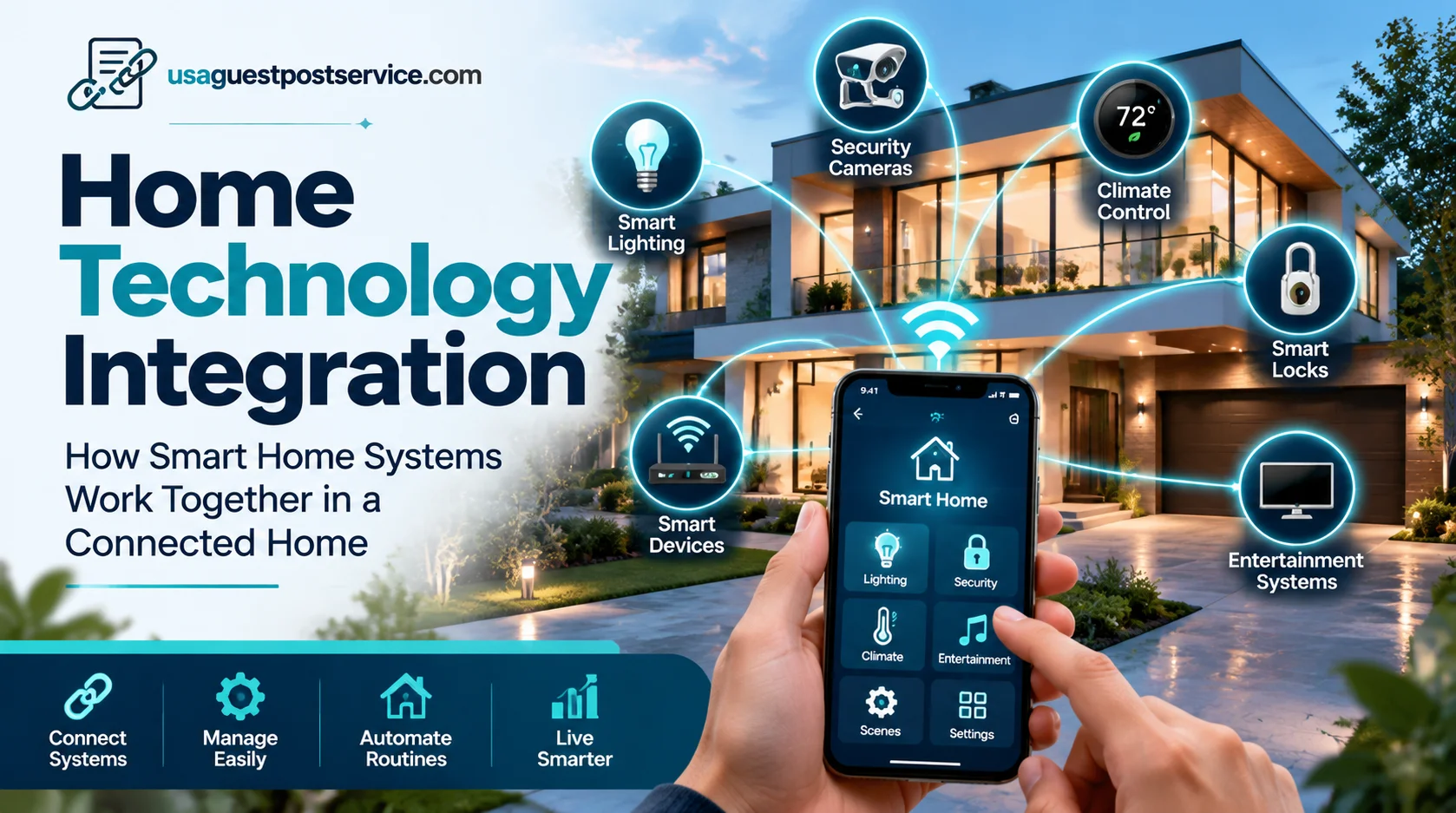
A modern smart home is not simply a collection of connected devices. The real value of smart home technology comes from how different systems communicate, exchange information, and work together to create a more coordinated living environment.
This process is known as home technology integration. It involves connecting different smart home technologies, such as lighting, security systems, climate controls, and entertainment solutions, so they can operate together through compatible networks, platforms, and control systems.
For homeowners exploring connected living, understanding integration is an important step before expanding a smart home setup. Individual smart devices can provide useful features, but an integrated system allows different technologies to support each other and create a smoother experience.
A connected home is not defined by the number of smart devices installed. Instead, the value comes from how effectively those technologies communicate, respond, and work together to support everyday needs.
This guide explains what home technology integration means, how smart home systems work together, the components involved, why compatibility matters, and what homeowners should consider when planning a connected home.
What Is Home Technology Integration?
Home technology integration is the process of connecting different smart home devices and systems so they can communicate and work together within a connected environment.
A single smart device usually performs a specific function. For example, a smart light provides connected lighting control, while a smart lock manages digital access. However, integration focuses on the relationship between multiple technologies rather than individual devices operating separately.
In an integrated smart home, different systems can exchange information through communication networks, integration platforms, and control interfaces. This creates a more organized way for homeowners to manage connected technologies throughout their homes.
For example, a homeowner may use:
- Smart lighting systems
- Security devices
- Climate control technologies
- Connected appliances
- Entertainment systems
When these technologies are integrated properly, they can work together instead of requiring separate controls for each individual device.
The difference between having smart devices and having an integrated smart home is communication.
A connected light bulb by itself is a smart device. A lighting system that communicates with security, climate, or other home technologies becomes part of a broader integrated ecosystem.
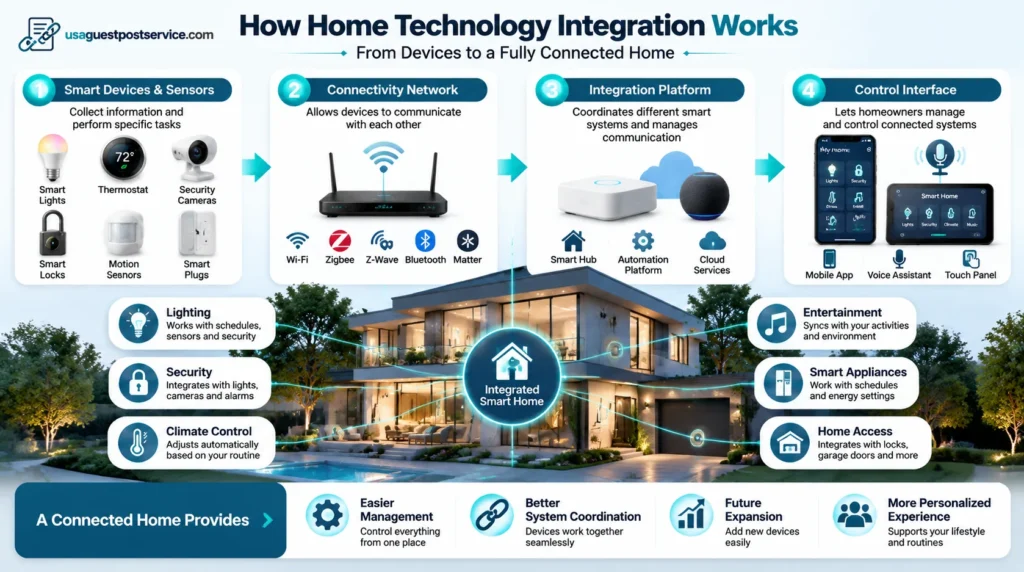
Home technology integration usually includes four important elements:
- Smart devices that perform specific functions
- Connectivity systems that allow devices to communicate
- Integration platforms that coordinate different technologies
- Control interfaces that allow homeowners to manage connected systems
The purpose of integration is not simply to add more technology. It is to create a connected environment where different systems work together in a way that supports homeowner preferences, routines, and daily activities.
How Do Smart Home Systems Work Together?
Smart home systems work together by allowing different connected devices and technologies to communicate through networks, integration platforms, and control systems.
Instead of each device operating independently, integration creates relationships between different technologies so they can exchange information and provide a more coordinated experience.
A simple way to understand this process is:
Smart Devices → Connectivity → Integration Platform → User Control → Connected Experience
Each part of this process has a specific role.
Smart devices collect information or perform actions. Connectivity allows those devices to exchange information. Integration platforms help coordinate different systems, while control interfaces allow homeowners to interact with their connected environment.
For example, a security sensor may detect activity, the connected network transfers that information, an integration platform manages the communication, and the homeowner can view or control the system through a connected interface.
The goal of this process is not only to connect devices but also to create meaningful relationships between different smart home technologies.
Smart Devices and Sensors
Smart devices and sensors are the foundation of an integrated smart home system.
These technologies perform specific functions while also collecting information or responding to commands.
Examples include:
- Smart lighting systems
- Security cameras
- Smart locks
- Smart thermostats
- Environmental sensors
- Connected appliances
Each device has its own purpose. A thermostat manages temperature settings, while a security sensor monitors activity or changes within a specific area.
However, individual devices alone do not create a fully integrated home. Their value increases when they can communicate with other connected technologies.
For example, a motion sensor can detect movement, but an integrated system can allow that information to interact with other connected systems based on homeowner preferences.
Connectivity and Home Networks
Connectivity provides the communication foundation that allows smart home devices to exchange information.
Without reliable communication, individual smart devices may continue to operate separately but cannot effectively participate in a larger integrated system.
Home networks help different technologies send and receive information while supporting communication between connected devices.
Important considerations include:
- Network reliability
- Device communication requirements
- Coverage throughout the home
- Future expansion needs
As homeowners add more smart technologies, a reliable connectivity foundation becomes increasingly important for maintaining a smooth connected home experience.
Key Components of a Home Integration System
A complete home integration system is built from multiple connected elements that work together to create a coordinated smart home experience.
While every homeowner’s setup may be different, most integrated smart homes depend on several important components that allow devices to communicate, share information, and remain manageable as the system grows.
Understanding these components helps homeowners plan a connected environment that is easier to use, expand, and adapt over time.
Smart Devices and Sensors
Smart devices are the physical technologies that interact with different parts of the home.
These devices can collect information, receive commands, perform actions, and communicate with other connected systems.
Examples include:
- Smart lighting systems
- Security cameras
- Smart locks
- Smart thermostats
- Environmental sensors
- Connected appliances
Each device serves a specific purpose. A smart thermostat manages temperature settings, while a security sensor monitors activity or changes within a particular area.
However, the value of smart devices increases when they can communicate with other technologies within the home.
For example, a motion sensor can detect movement, but an integrated system can allow that information to work with lighting, security, or other connected systems based on homeowner preferences.
Connectivity Infrastructure
Connectivity infrastructure provides the foundation that allows smart home technologies to communicate with each other.
This includes the networks and communication systems that support information exchange between connected devices.
Important considerations include:
- Reliable home networks
- Device communication requirements
- System coverage
- Future technology expansion
A strong connectivity foundation helps ensure that different smart technologies can exchange information effectively.
Without reliable communication, devices may continue to function individually but may not provide the connected experience homeowners expect from an integrated smart home.
Integration Platforms and Controllers
Integration platforms and controllers help manage relationships between different smart home systems.
When homeowners add multiple connected technologies, managing each device separately can become more complicated. Integration platforms help organize these technologies by allowing different systems to communicate and work together more effectively.
These platforms may help coordinate:
- Smart lighting
- Security systems
- Climate control devices
- Entertainment systems
- Connected appliances
For example, a homeowner may want security systems and lighting systems to work together. When these technologies are connected through a compatible platform, they can provide a more unified experience instead of operating as separate solutions.
The purpose of an integration platform is not simply to add another technology layer. Its role is to help different systems communicate and make connected living easier to manage.
As a smart home expands, integration platforms become increasingly important because they help maintain relationships between different technologies and support future growth.
User Control Interfaces
A smart home system needs a practical way for homeowners to interact with connected technologies.
Control interfaces create the connection between people and their integrated smart home systems. Depending on the setup, homeowners may manage their connected devices through:
- Mobile applications
- Voice commands
- Touch interfaces
- Centralized control systems
For smaller smart home setups, a mobile application may provide enough control. However, larger connected homes may benefit from more organized management approaches.
The goal of a control interface is to make technology easier to use rather than create additional complexity.
For homeowners exploring advanced connected environments, solutions such as smart home control panels can provide a more centralized approach to managing multiple systems.
Real Examples of Smart Home Integration
Understanding how integration works becomes easier when looking at practical situations.
The purpose of home technology integration is not only to connect devices but also to create relationships between different systems that support everyday activities and homeowner routines.
Leaving Home Scenario
Imagine a homeowner leaving their house.
In a connected home environment, multiple systems can work together instead of requiring separate actions for each device.
A possible sequence may include:
- A smart lock detects that the homeowner has left
- Security systems adjust their status
- Selected lights turn off
- Climate settings respond according to preferences
In this example, each technology performs its own function, but integration allows these systems to work together as part of one connected experience.
The value comes from communication between technologies rather than from a single device operating alone.
Arriving Home Scenario
Integration can also support routines when homeowners return home.
For example:
- A connected access system recognizes entry
- Lighting adjusts based on preferences
- Comfort settings respond according to selected routines
This type of connected experience demonstrates how different smart home systems can support homeowner preferences when they are properly integrated.
Entertainment and Comfort Scenario
Another example involves combining multiple systems to create a more connected living environment.
A homeowner may use:
- Smart lighting for atmosphere
- Connected entertainment systems for media control
- Climate systems for comfort management
When these technologies work together, homeowners can manage different parts of their environment more conveniently.
This highlights the difference between owning individual smart devices and creating a connected smart home system.
Why Compatibility Matters in Smart Home Integration
One of the most important considerations when planning a connected home is compatibility.
Smart devices do not automatically work together simply because they are connected technologies. Successful home technology integration depends on whether different devices, platforms, and systems can communicate effectively with each other.
A homeowner may purchase individual smart devices that work well separately but later discover that managing them together is difficult because they use different systems or cannot communicate properly.
Compatibility determines whether a smart home can operate as a coordinated environment rather than a collection of disconnected products.
Important compatibility considerations include:
- Whether devices can communicate with each other
- Whether platforms support the required technologies
- Whether systems can be expanded in the future
- Whether homeowners can manage multiple devices easily
Planning compatibility before purchasing new smart technologies can help create a smoother connected home experience and reduce future limitations.
Planning for Device Compatibility
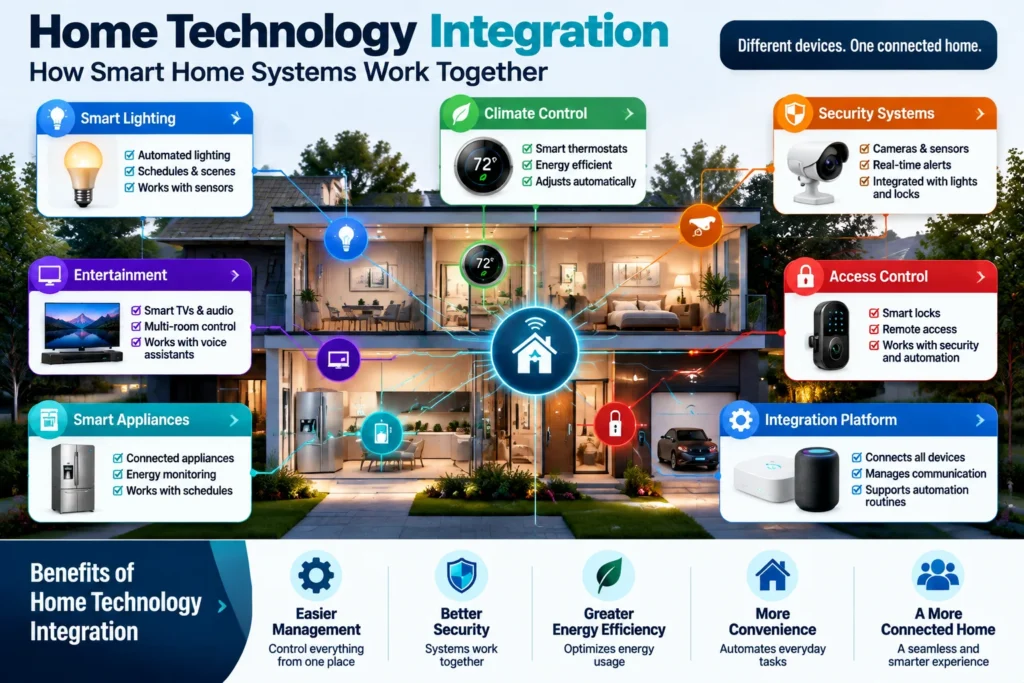
Before adding new smart home devices, homeowners should consider how each technology fits into the overall system.
For example, a homeowner planning to add:
- Smart lighting
- Security cameras
- Smart locks
- Climate control systems
should think about how these technologies will work together over time.
Choosing devices only based on individual features may create challenges later if those devices cannot communicate effectively with other systems.
A better approach is to consider:
- Current needs
- Future expansion plans
- System compatibility
- Ease of management
An integrated smart home should be planned as a complete environment rather than a collection of unrelated devices.
Integrating Smart Home Devices Successfully
Integrating smart home devices requires more than simply connecting products to a network.
A successful approach considers the relationship between different technologies and how they support homeowner routines and preferences.
Important factors include:
- Device compatibility
- System planning
- Network reliability
- User preferences
- Future technology additions
For homeowners exploring integrating smart home devices, understanding how different technologies communicate is an important step before expanding a connected home system.
The goal is to create an environment where smart devices support each other instead of operating separately.
Why Compatibility Becomes More Important Over Time
A small smart home setup may be simple to manage, but complexity can increase as more technologies are added.
For example, a homeowner may start with smart lighting and later add:
- Security systems
- Climate controls
- Entertainment systems
- Connected appliances
As the number of systems grows, the relationship between devices becomes more important.
Without proper planning, homeowners may experience:
- Multiple separate applications
- Limited communication between devices
- Difficulty managing connected systems
- Challenges when adding new technologies
Thoughtful planning helps ensure that a smart home remains practical, flexible, and easier to manage as it expands.
Integration vs Smart Home Automation: What Is the Difference?
Home technology integration and smart home automation are closely related concepts, but they solve different problems.
Many homeowners use these terms interchangeably, which can create confusion when planning a connected home.
Understanding the difference helps homeowners decide what type of smart home experience they want to create.
What Is Home Technology Integration?
Home technology integration focuses on connecting different smart home systems so they can communicate and work together.
The main purpose of integration is creating relationships between technologies.
Examples include:
- Connecting smart lighting with security systems
- Linking climate control with other home systems
- Managing multiple connected technologies through coordinated platforms
Integration creates the foundation that allows different smart home systems to operate together.
It answers the question:
How can different technologies communicate with each other?
What Is Smart Home Automation?
Smart home automation focuses on enabling connected technologies to perform actions automatically based on specific conditions, schedules, or preferences.
Examples include:
- Lights turning on at a scheduled time
- Temperature settings adjusting automatically
- Devices responding to specific events
Automation answers the question:
What should connected technologies do automatically?
Automation often depends on integration because connected systems need to communicate before they can respond to certain conditions.
For homeowners interested in learning more about automated routines and connected actions, smart home automation is a separate area within the broader smart home ecosystem.
Integration vs Automation: A Simple Difference
The easiest way to understand the difference is:
Integration connects technologies.
Automation allows connected technologies to perform actions automatically.
Example:
Integration:
A smart lock, security system, and lighting system are connected and able to communicate.
Automation:
When the smart lock is activated, the lighting system automatically responds based on a predefined setting.
Both concepts are important parts of a connected home, but they serve different purposes.
A smart home can have integration without advanced automation, and automation depends on connected systems that can communicate effectively.
Factors That Affect Home Technology Integration Cost
The cost of home technology integration can vary depending on the complexity of the system, the number of technologies involved, and the requirements of the home.
There is no single cost that applies to every connected home because each homeowner may have different goals, existing infrastructure, and technology preferences.
A simple setup with a few connected devices may require less planning, while a larger integrated system involving multiple areas of the home may require more consideration.
Several factors can influence the overall investment and complexity of a home technology integration project.
Number of Connected Systems
The number of systems a homeowner wants to integrate can affect planning requirements.
A basic setup may involve only a few connected devices, while a larger connected home may include multiple technologies such as:
- Smart lighting
- Security systems
- Climate control
- Entertainment systems
- Connected appliances
As more systems are added, the relationship between different technologies becomes more complex.
A well-planned approach focuses on how these systems communicate and how easily homeowners can manage them together.
Existing Home Infrastructure
The existing condition of a home can influence how smart technologies are integrated.
Important considerations may include:
- Current network setup
- Electrical infrastructure
- Home layout
- Existing connected technologies
For example, a home with a strong technology foundation may have different integration requirements compared with a home that needs additional preparation before adding multiple smart systems.
Understanding the existing environment helps homeowners choose a practical integration approach.
Technology Complexity and System Planning
More advanced connected homes often require additional planning because multiple systems need to work together effectively.
Factors that may affect complexity include:
- Device compatibility
- Communication requirements
- Control preferences
- Future expansion plans
A successful integration strategy focuses on long-term usability rather than simply adding more connected devices.
The goal is to create a system that remains practical and manageable as homeowner needs change over time.
When Professional Smart Home Integration May Be Useful
Many homeowners can begin exploring smart home technology with simple connected devices. However, professional support may become useful when a project involves multiple systems, advanced planning, or complex integration requirements.
Professional guidance may help when homeowners need to:
- Connect multiple smart home systems
- Plan a larger whole-home technology environment
- Address compatibility challenges
- Coordinate complex installation requirements
For example, a homeowner planning to combine lighting, security, climate control, and entertainment systems may benefit from a structured approach to ensure different technologies work together effectively.
For readers interested in implementation considerations, a smart home installation setup guide can provide additional information about planning and setup.
The purpose of professional support is not simply to add more technology. It is to help create a connected environment that remains easier to manage and adaptable over time.
Conclusion: Creating a More Connected Home Through Integration
Home technology integration is the foundation that allows different smart home systems to communicate and work together.
While individual smart devices can provide useful features, integration creates a more coordinated connected home experience by connecting technologies through compatible systems, networks, and control methods.
Understanding the difference between smart devices, integration, and automation helps homeowners make better decisions when planning smart home upgrades.
A successful connected home is not defined by the number of devices installed. It is defined by how effectively those technologies support daily routines and work together as a system.
By considering compatibility, infrastructure, and future expansion, homeowners can create a smart home environment that is more practical, flexible, and easier to manage.
Frequently Asked Questions About Home Technology Integration
What is home technology integration?
Home technology integration is the process of connecting different smart home devices and systems so they can communicate and work together through compatible networks, platforms, and control systems.
It helps transform separate connected devices into a more coordinated smart home environment.
Can all smart home devices work together?
Not all smart home devices automatically work together.
Compatibility depends on factors such as device support, communication methods, platforms, and system design.
Planning compatibility before adding new technologies can help create a more connected and manageable smart home system.
What is the difference between integration and automation?
Integration connects different smart home technologies so they can communicate.
Automation allows connected technologies to perform actions automatically based on schedules, conditions, or user preferences.
Integration creates the relationship between systems, while automation uses those connections to perform specific actions.
Do I need professional help for smart home integration?
Simple smart home setups may be managed independently.
Professional support may be useful for larger projects involving multiple connected systems, advanced planning, compatibility challenges, or complex installation requirements.
Is smart home integration expensive?
The cost of smart home integration depends on factors such as the number of systems, technology complexity, existing infrastructure, and implementation requirements.
Every smart home project has different needs, so the overall cost can vary depending on the specific goals and setup.